In cement and non-metallic mineral plants, Vertical Roller Mills (VRMs) are often promoted as the “standard solution” for grinding efficiency.
But in real operation, many plants face unexpected bottlenecks after installation.

EN
Why Vertical Roller Mills Fail in Real Cement & Mining Operations?
2026-01-06 11:13:18
🔹 1. Is higher grinding efficiency always equal to lower operating cost?
On paper, VRMs show excellent energy performance.
In reality, many plants experience:
Unstable vibration during variable feed
High sensitivity to raw material moisture
Frequent wear on rollers and grinding tables
👉 Is your mill optimized for your raw material—or just designed for a lab condition?
🔹 2. Can one VRM design fit limestone, clinker, slag, and non-metallic minerals?
Different materials mean:
Different grindability
Different abrasiveness
Different drying requirements
Yet many projects reuse the same mill concept.
👉 Should material adaptability be treated as a core design parameter, not an afterthought?
🔹 3. Are maintenance costs underestimated during project planning?
In many plants, we see:
Roller re-welding cycles shorter than expected
Long downtime due to limited spare parts compatibility
Overdependence on OEM service teams
👉 Is your maintenance strategy integrated into the mill design—or handled only after failures occur?
🔹 4. What happens when production targets increase after commissioning?
Market demand changes. Capacity requirements grow.
But:
Separator efficiency becomes the bottleneck
Fan systems reach their limits
Mill stability declines at higher throughput
👉 Was your VRM designed with future expansion in mind?
🔹 Final Thought for Plant Owners & Engineers
A Vertical Roller Mill is not just a piece of equipment.
It is a system decision involving:
Process design
Material behavior
Maintenance philosophy
Long-term operational flexibility
Before investing—or retrofitting—ask the right questions first.
🔧 At LVSSN, we focus on engineering-driven grinding solutions for cement and non-metallic mineral production lines—from design to optimization.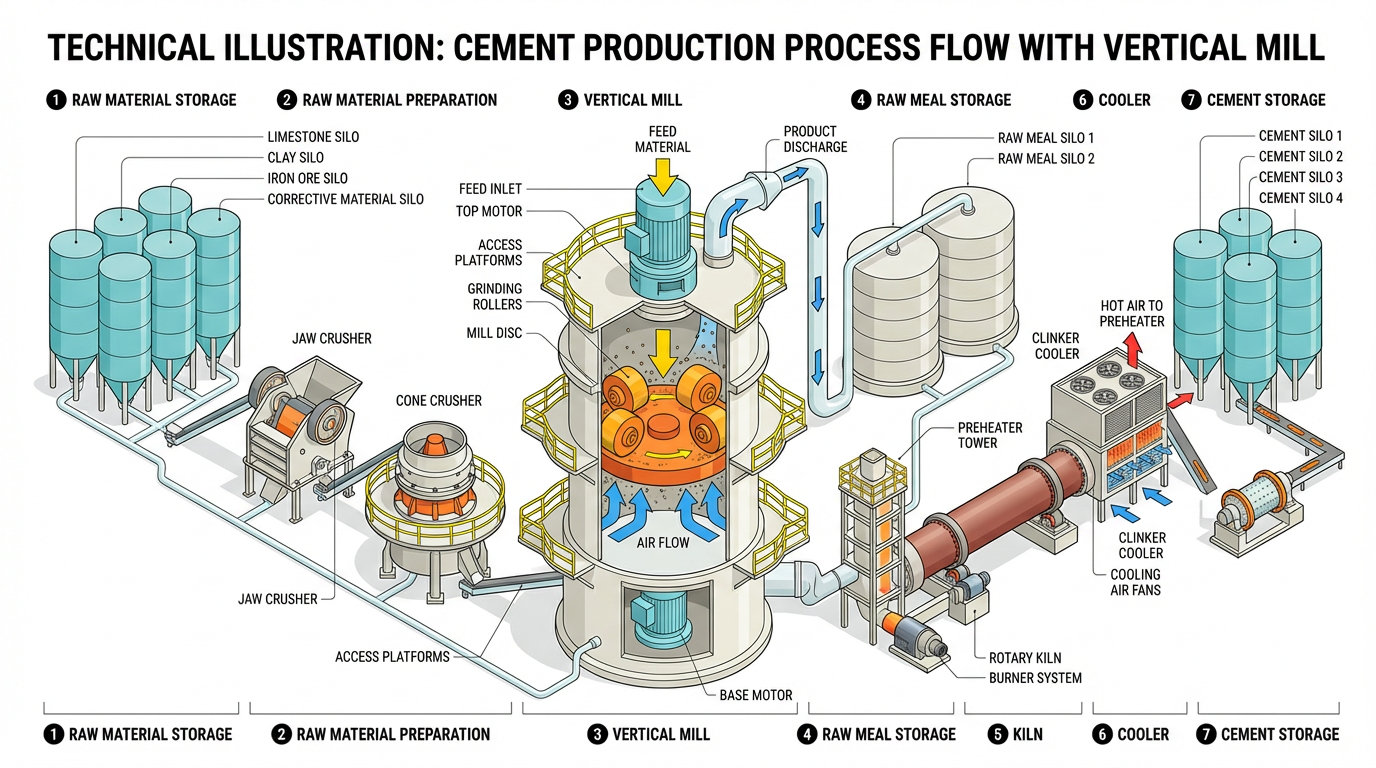
Previous
Next
View List
