In today’s cement industry, grinding efficiency is no longer just about capacity — it is about energy cost, uptime, and long-term reliability.
Many cement producers are now upgrading from traditional ball mills to Vertical Roller Mills (VRM) to stay competitive.
Here’s why.

EN
Vertical Roller Mill (VRM): Why Modern Cement Plants Are Shifting to Smarter Grinding Systems
2026-02-04 09:45:59
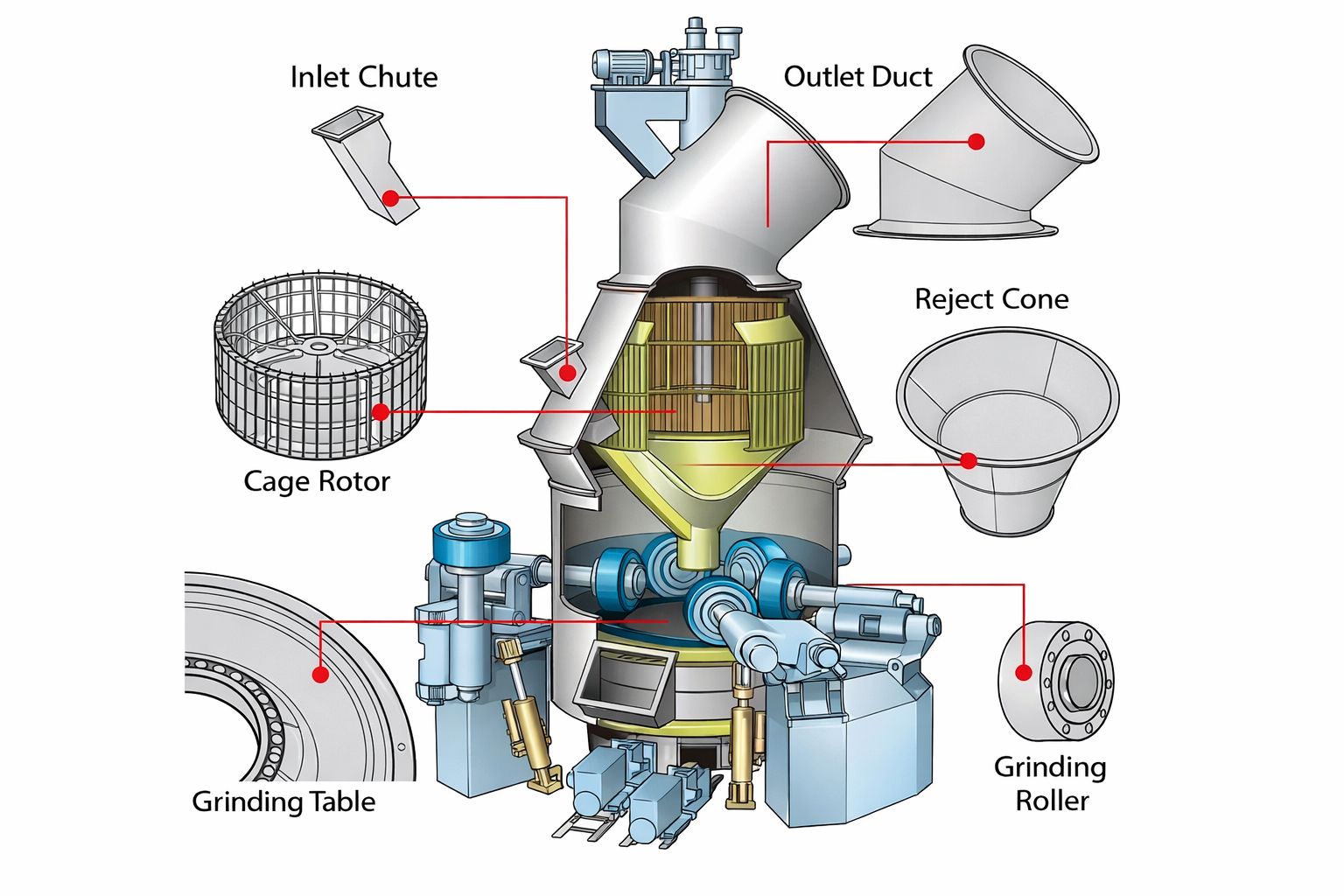
🔧 1️⃣ Up to 30% Lower Energy Consumption
Compared with conventional ball mills, VRM systems can reduce power consumption by 20–30% in raw meal and cement grinding.
Key reasons:
Integrated grinding, drying, and classification
Optimized grinding pressure control
Reduced material circulation
Lower energy cost = Higher plant profitability.
⚙️ 2️⃣ Stable Operation Under Harsh Conditions
In many regions (Africa, South America, Middle East), plants face:
✔ High moisture raw materials
✔ Unstable power supply
✔ High ambient temperature
Modern VRM designs are engineered to handle these challenges through:
Advanced hydraulic loading systems
Smart vibration monitoring
Automatic material bed control
This means less downtime and fewer shutdowns.
🏭 3️⃣ Compact Layout, Lower Civil Investment
VRM systems require:
Smaller installation footprint
Lower foundation cost
Reduced auxiliary equipment
For brownfield upgrades and limited-space plants, this is a major advantage.
🔄 4️⃣ Easier Upgrade & Retrofit Solutions
For existing cement plants, VRM retrofits can deliver:
✅ Capacity expansion
✅ Energy-saving upgrades
✅ Process optimization
✅ Digital control integration
Without rebuilding the entire production line.
🌍 5️⃣ Supporting Low-Carbon Cement Production
With stricter environmental regulations, VRM helps plants achieve:
Lower CO₂ emissions per ton
Reduced dust leakage
Improved material utilization
Making sustainability and profitability compatible.
📌 Our Engineering Focus at LVSSN
At LVSSN Engineering, we focus on:
✔ VRM system design & optimization
✔ EPC and upgrade projects
✔ Spare parts & technical support
✔ Customized solutions for emerging markets
We believe every plant deserves a solution tailored to its real operating conditions.
🤝 Let’s Connect
If you are planning:
🔹 VRM upgrade
🔹 Grinding capacity expansion
🔹 Energy-saving retrofit
🔹 New grinding line project
Follow our page and connect with our engineering team.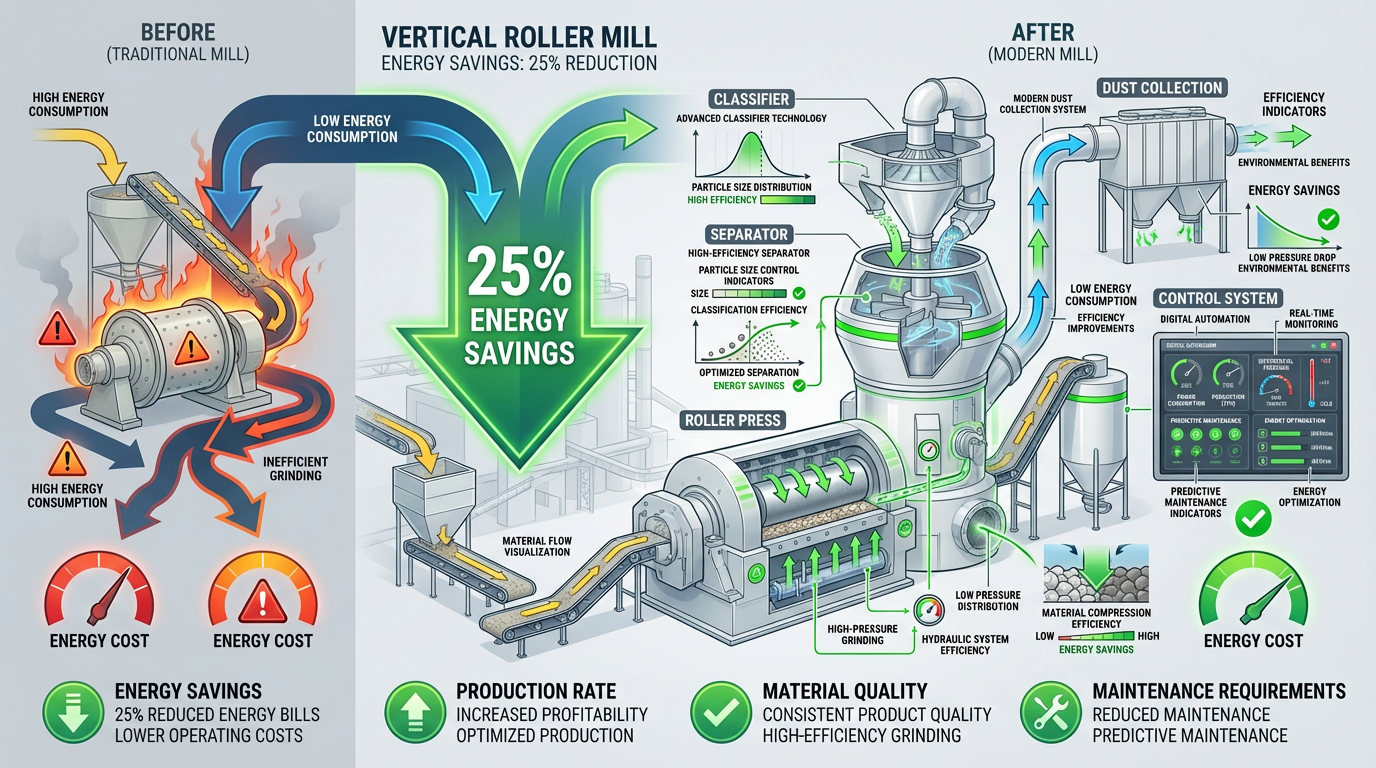
Previous
Next
View List
